Charging
Public EV Charging UK: Costs, Contactless Payments and Card Holds
Compare public charging prices, understand which chargers must offer contactless payment, and check pending card holds without confusing them with the final bill.
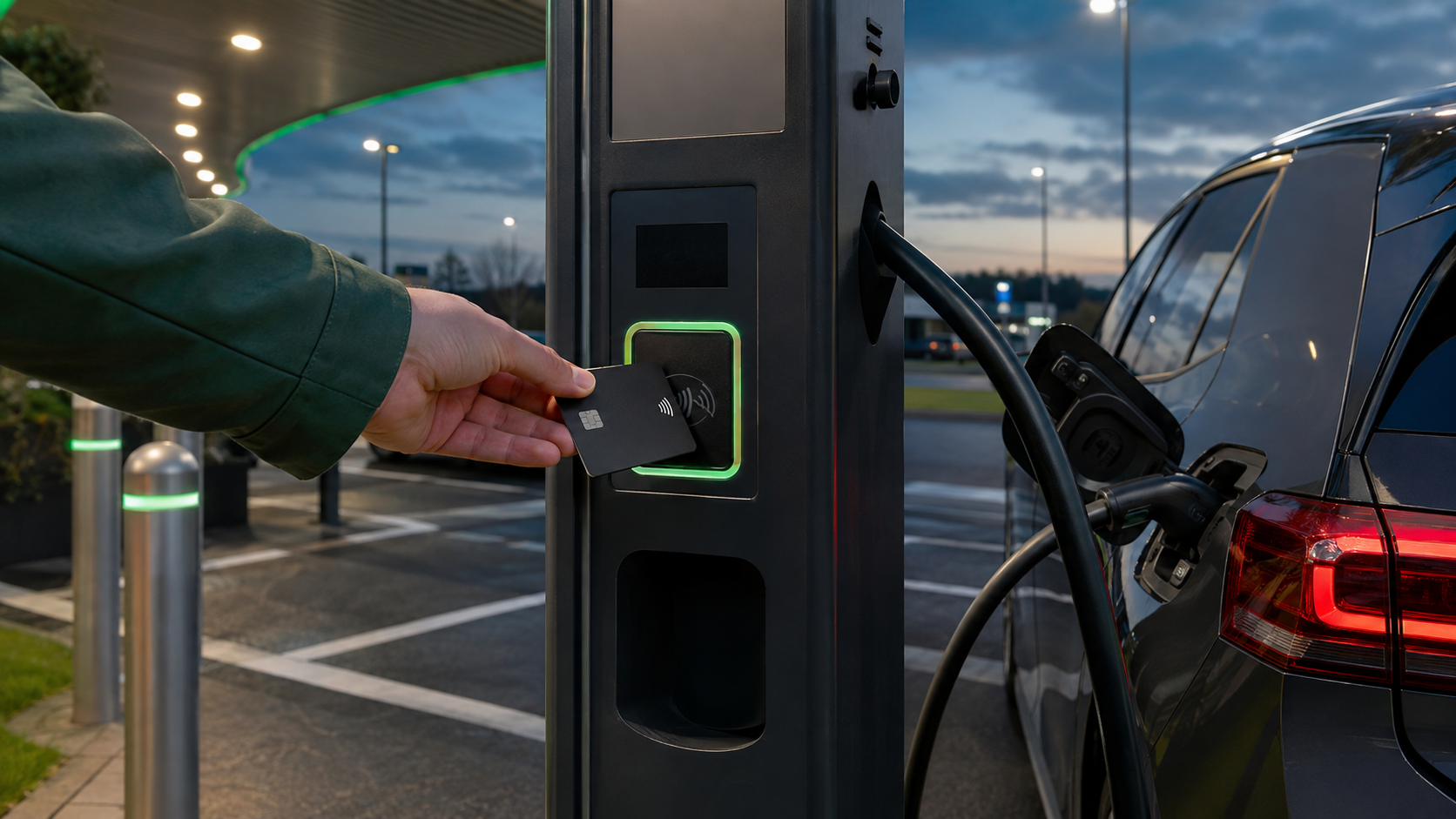
Short answer: check the price for your chosen payment method before starting, calculate the energy cost, and distinguish a pending card authorisation from the completed charge. A charger app, bank-card terminal and roaming service should not be assumed to offer the same rate.
Sources checked 2 September 2026. This is a practical guide for battery-electric car drivers, not a live tariff list or legal advice.
Can I charge without downloading an app?
UK government guidance requires contactless bank-card payment for paid public chargers rated 50kW or more, and new public chargers rated at least 8kW deployed after 24 November 2024. A nearby shared terminal can serve several chargers. Lower-powered units and older units below 50kW are not all covered by that requirement. Free charging is exempt; formerly private networks opening to the public have a one-year transition. Check the actual site before travelling. Read the government contactless guidance.
Compare the whole session, not just a headline rate
The government guidance says the maximum charging price must be visible before the session in pence or pounds per kWh. Charging-related fixed fees belong in that displayed unit-price calculation. Separate third-party parking charges can still apply. Read parking signs as well as the charging screen. See the pricing rules and exceptions.
Zapmap explains that some networks charge more when payment is made through a third-party service. Compare the price displayed by the payment route you will actually use, rather than assuming an app or roaming card is cheaper. Zapmap payment and pricing FAQs.
A worked example, not a current tariff
If the charger bills 30kWh at 75p/kWh, the energy cost is £22.50. At an illustrative 65p/kWh, the same billed energy costs £19.50: a £3 difference. Add any separate parking cost before comparing the total.
For a hypothetical £8 monthly subscription saving 10p per kWh, the fee is recovered at 80kWh per month (£8 divided by £0.10). That is only the break-even point, not a saving. Use your expected eligible charging volume and the actual subscription conditions; do not pay a monthly fee merely because the advertised unit rate is lower.
Why is there a pending amount on my bank account?
A pre-authorisation reserves funds before charging and is not necessarily the final bill. For example, Zapmap currently describes £30 holds for registered users and £60 for guests. It says a completed session normally adjusts within minutes, sometimes up to an hour; failed-start holds are released within 24 hours, but the bank can take several days to show the change. These are Zapmap's stated arrangements, not a promise for every network. Check Zapmap's current authorisation policy.
What to do if payment looks wrong
- Save the session receipt, charger ID, time, billed kWh and displayed tariff.
- Check whether the bank entry is pending or completed before describing it as a duplicate payment.
- Ask the charging payment provider to explain the transaction; ask your bank about a hold that remains after the provider says it has been released.
- For help at the charger, use the operator's displayed support number. UK guidance requires a free, staffed, round-the-clock helpline for public chargepoints. Helpline requirements.
Keep card details and receipts private: do not post full payment information in public comments.
Useful next steps
Browse charging resources · Compare home-charger features · Check current chargepoint grant routes.
Savings paths
Related EV savings categories
Explore practical guides and information for charging, accessories and other EV ownership costs.
Continue exploring
More useful EV guides
 Buying Guide
Buying a Used EV: Documents, MOT History and Battery Evidence
2 Sep 2026 Read guide → EV Guide
UK EV Chargepoint Grants 2026/27: £500 Home and Workplace Support
2 Sep 2026 Read guide → EV Guide
Discussion
Comments
Comments are manually reviewed before publication to keep EVDeal useful and spam-free.